Silhouette of trees obscured by fog

Justice for the Disappeared

Disappeared to a
Third Country

Since January 2025, the United States has sent people not to their home countries, but to third countries - nations many of them had never lived in and to which they had no connection.

Children are among them: from January 20, 2025 to March 10, 2026, 2,665 children were disappeared to third countries, including Panama, El Salvador, Colombia, Mexico and Canada. More than half were aged 6 to 12. Over 20 percent were 5 or under.

The stories below come from case research on the adults caught in the same policy - who they are, what the law had already decided in their cases, and where they were sent.

(Source: Factchequeado)

Scroll

Where we began

We started with the CECOT stories. Here we are.

This project began with the CECOT stories. Today, the work continues: documenting disappearances, sharing people’s stories, and connecting families with resources.

The website may have changed along the way, but our commitment remains: every person deserves dignity, due process, and to be seen.

Continue to the stories
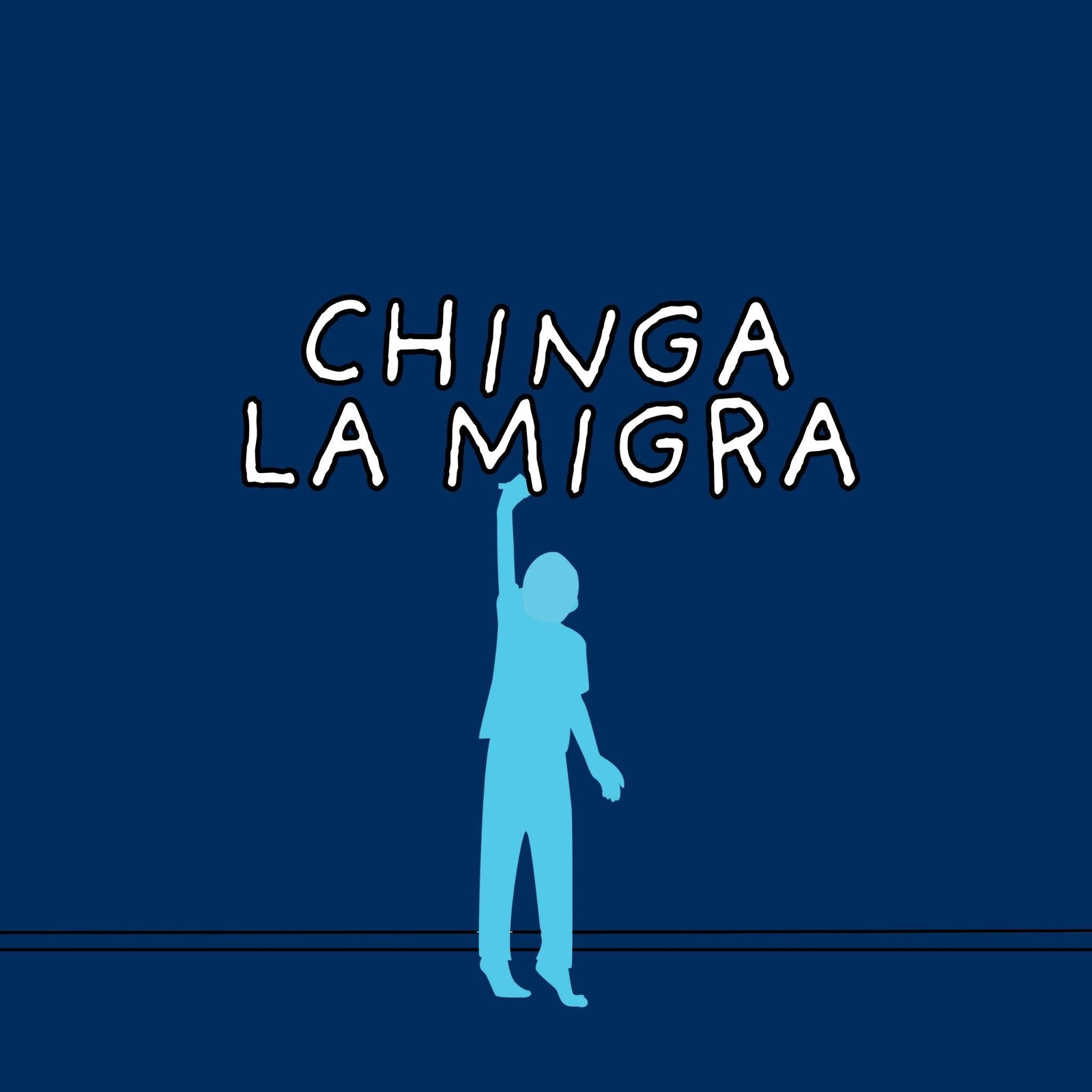
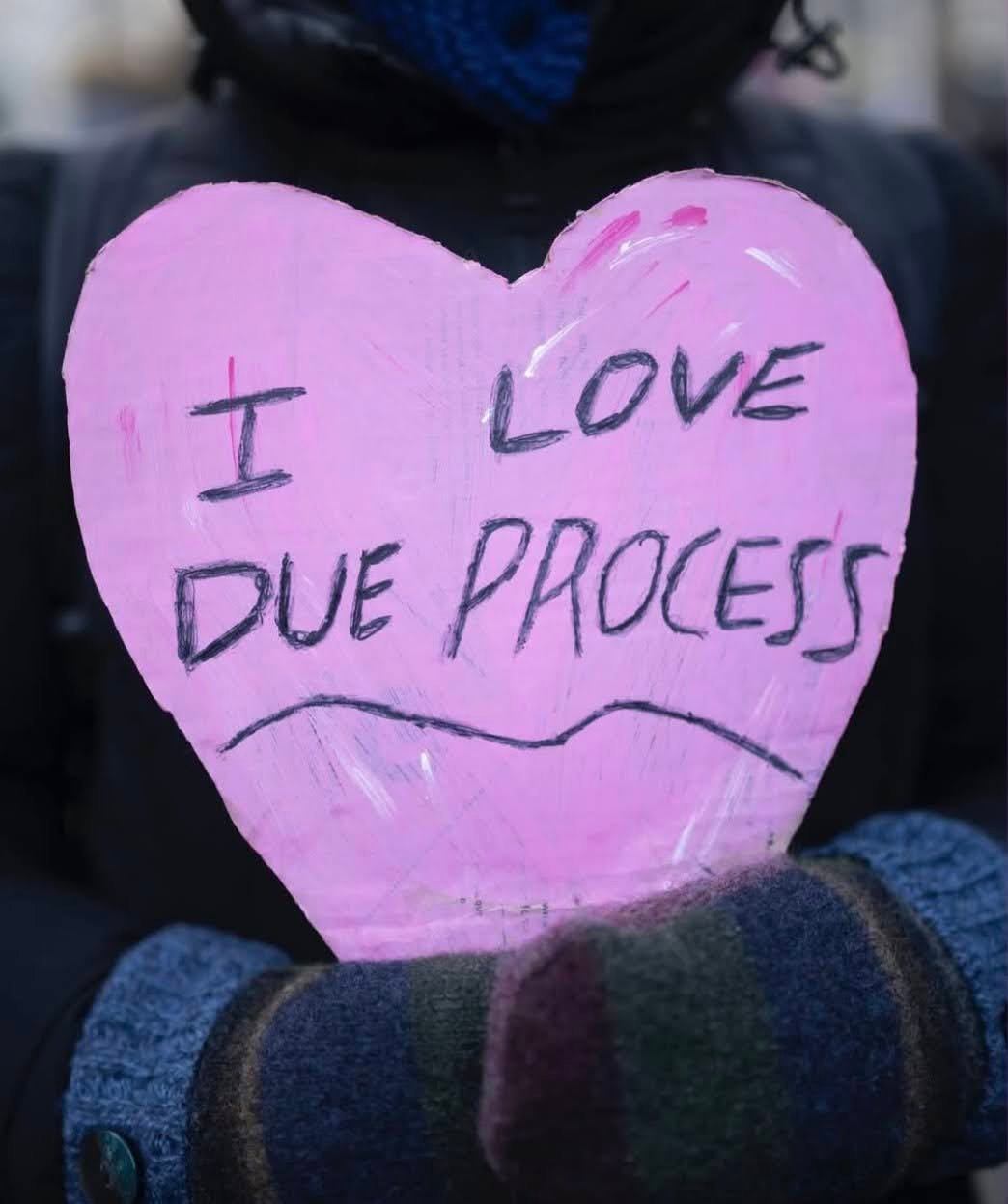
Graphic reading Chinga la Migra above a blue silhouette raising a fistA pink heart-shaped sign reading I love due process

The Cases

Follow on Facebook

Case research by Joanne Rowden

Lead Stories

Little Village Mag

Fatou Traore Lived in Iowa for Twenty Years. She Was Disappeared to Sierra Leone.

Fatou Traore is the mother of four children, ages 3 to 19, all of them U.S. citizens. She arrived in the United States from Ivory Coast more than 20 years ago, and in 2011 a judge granted her a withholding of removal order. She has no criminal record. She worked as a custodian at University of Iowa Healthcare. On September 24, she was at her sister's home to pick her up from work when unidentified ICE agents pulled her out of her car and placed her in an unmarked vehicle. She was taken to the Cedar Rapids County jail, then to Omaha, then to a private detention center in Louisiana. For a week, she was given no reason for her detention. On October 12, 2026, she was disappeared to Sierra Leone — a country that is not her home — even though her lawyer had a motion pending to stop her flight.

The Guardian

A Judge Found He Would Be Tortured in Egypt. Ahmed Soliman Was Disappeared to Equatorial Guinea.

Ahmed Soliman is a gay man from Egypt who had lived in Phoenix for most of his life. He held a green card, but lost his status after a conviction for drug possession, and he served time for his crimes. In October, a judge determined that he would face persecution and torture if he were returned to Egypt because of his sexuality. He was disappeared instead to Equatorial Guinea. There, Soliman filmed conditions on his mobile phone, including officers pointing guns at the disappeared people and a beating on September 11. In one video, later shared by lawyers with the Guardian, a Cuban man asks an officer for the return of his confiscated mobile phone so he could contact relatives and a lawyer, and is ignored. When officers noticed Soliman filming, several rushed at him and the men standing nearby, pointed their guns, and told him to remain on his knees with his hands up for 10 to 15 minutes. In another video, he filmed authorities forcibly sending people the U.S. had disappeared on to Ethiopia. Those who resisted were given a choice: "go back to their home country" or "go to prison."

ABC News

"I Feel Kidnapped": Aristides Fernandez Garcia, Disappeared Without Papers

Aristides Fernandez Garcia is a Cuban man who was disappeared to the Central African Republic with no legal papers. Without documents, he and others sent there are left in legal limbo. "I feel kidnapped," Fernandez Garcia said. "They have violated all the rights that exist in life, because we are human beings."

CBS News

Carlos Tellez Sanchez Was Detained at His Own Immigration Appointment

Carlos Tellez Sanchez crossed the border undocumented in 2021 and was detained during the Biden administration. DHS says he had been disappeared once before. In 2021, an immigration judge granted him a withholding of removal — protection against being sent back to Venezuela. After that, he attended his immigration appointments as required. On December 19, 2025, he was detained at one of those appointments. He spent eight months in detention before being sent to Liberia. Sanchez has no criminal record, a fact that is not disputed by DHS. DHS says he had multiple opportunities to leave voluntarily for Mexico. He was sent to Liberia instead.

Equatorial Guinea

The Guardian

Samson Birhane Came to America as a Refugee at 13. In Equatorial Guinea, He Was Beaten.

Samson Birhane is from Eritrea. He came to the United States as a refugee when he was 13, but lost his status after a robbery conviction in high school, in 1988. An immigration judge later ruled that he faced torture in Eritrea, and he was allowed to remain in the United States. For years afterward, he checked in regularly with Immigration and Customs Enforcement, as required. After he was disappeared to Equatorial Guinea, Birhane was one of two men who were beaten. The beating, on September 11, followed the release of a video — first reported by Reuters — showing conditions at the hotel where the disappeared people were held and the violent behavior of the guards. The detainees had been using cellphones to communicate with lawyers and the media about the conditions they were facing.

Eswatini

El País

Roberto Mosquera del Peral Was Said to Be Returned to Cuba. That Was a Lie.

Roberto Mosquera del Peral was disappeared from the United States to Eswatini. According to reporting by El País, a friend of his, Ada, said they were told he had been returned to Cuba — but that was a lie.

WiredJA

Junior Alves Lived in America for 44 Years. He Is Now in a Prison in Eswatini.

Junior Alves lived in the United States for 44 years. His family confirms he has no criminal convictions, and in 2016 he was granted a stay under the Convention Against Torture. He was required to report to immigration authorities once a year, and he did. On January 11, he was picked up at his home. He remained in detention until July, when he was transported to Eswatini. Alves is the father of eight and the grandfather of eleven, all of them U.S. citizens. He and his wife operate a transport business. Every Saturday he fed more than 250 homeless people, and he found work for people who were jobless; he was a leader in his community. He spent time in detention at "Alligator Alcatraz." When he was detained, he invoked his Convention Against Torture status, and he refused to sign removal papers. According to his wife, a habeas corpus petition was pending on a judge's desk. He is now held in a prison in Eswatini.

The New York Times

Orville Etoria Earned a Degree, Finished His Parole — and Was Disappeared to Eswatini

Orville Etoria is from Jamaica. He completed a prison sentence for murder, criminal possession of a weapon, armed robbery and forcible theft with a deadly weapon. His green card was revoked, and a final order of removal was issued against him in 2009. When he completed his sentence in 2021, immigration officials allowed him to remain in the United States, provided he completed an annual check-in. Behind bars, he had earned a bachelor's degree. He successfully completed his parole, got a job at a men's shelter, and started pursuing a master's degree in divinity. In July 2025, he was disappeared to Eswatini, whose men the United States had branded "uniquely barbaric" for their home countries to take back. He was repatriated to Jamaica in September. According to Legal Aid NYC, Etoria held a valid Jamaican passport, and Jamaican authorities refute the claim that they were unwilling to take him.

Democratic Republic of Congo

Welt

Jorge Cubillos Was Told: Agree to Mexico, or Be Sent to Africa

Jorge Cubillos came to the United States from Colombia in 2018 with his wife and two children, now 17 and 11. Two more children, now 6 and 3, were born here. He says he left Colombia because of problems with the ELN guerrilla group. He worked first as a truck driver, later as an Uber driver. In early January 2026, Seminole County Sheriff's Office paperwork indicates he was arrested for domestic violence; his wife did not press charges, and he was released after a night in custody. He says it was a misunderstanding, and that his wife did not call the police. Those events have not been independently verified. On January 8, he was detained during an Uber shift. His asylum application had been rejected in 2022, and DHS said he was under a final removal order; Cubillos says he held withholding of removal status, and a decision in his habeas corpus case was still pending. He refused a return to Colombia for security reasons. Officials pressed him to agree voluntarily to Mexico, or be sent to Africa. He is now housed in "Venus Village," a dilapidated hotel complex outside Kinshasa.

Central African Republic

CBS News

Zena Gebrgzabher Was Protected From Being Disappeared to Eritrea. He Was Sent to the Central African Republic.

Zena Gebrgzabher has a wife and a five-year-old son in Maryland who are U.S. citizens. He worked there as a truck driver before being detained, and no criminal record could be found for him in a CBS investigation. In 2017, an immigration judge found him eligible for protection under the Convention Against Torture and barred his disappearance to Eritrea. He did not receive a more permanent legal status, because of time he served as a checkpoint guard in the Eritrean military, where he had been forcibly conscripted at 18. He overstayed a leave from the military and was imprisoned. Then he fled to the U.S.–Mexico border. In the United States, he checked in with ICE regularly. He was disappeared to the Central African Republic — not Eritrea, the one country a judge had barred the government from sending him to.

AP News

Daniela Fuentes Learned Where She Was Going Five Hours Into the Flight

Daniela Fuentes lived in Miami, where she styled hair and performed drag in nightclubs. A transgender woman, she had lived as the woman she knew herself to be since childhood. Growing up outside Havana, she began living as a woman in adolescence, starting hormones at 18; she ran a salon from her home, and says she was harassed for her gender identity and attacked twice. In 2023, amid economic crisis and a crackdown on dissent, she sold her home and traveled north dressed as a man to protect herself. After seven months in Mexico, she entered in Texas through the CBP One app, was allowed entry on humanitarian grounds, and went to Miami. She had asked to move her case from Texas to Florida, never heard back, and missed an appointment in Texas. Officers detained her outside her hotel and placed her in a facility with men. She was not told she was being taken to the Central African Republic until five hours into her flight to the Central African Republic. She does not have an immigration lawyer. In Bangui she shares a room with four Cuban men and rarely leaves the compound. The disappeared people there have no papers, so they cannot work.

El País

Brayan Omar Sanchez Hid $60 Through Four Detention Centers. It Bought Him a Phone Call Home.

Brayan Omar Sanchez worked in the United States as a truck driver and a gardener, and he operated a small pressure-washing business. He was always undocumented, and he says he had a pending asylum case. He had been released from custody on an I-220A — an order of release on recognizance — while his case came up in immigration court. He was detained the day he appeared before a judge in Miami. He was first held at the Krome North Service Processing Center in Miami, then spent two months in Denver. On July 26 he was transferred to Phoenix, and finally to the Prairieland Detention Center in Alvarado, Texas. He insists he never signed a removal order. He was disappeared on the July 31 flight. He had managed to hide $60, which an officer in Bangui exchanged for him; he bought a phone and called his wife. He is now living at Maison Confort, in Lakouanga, a neighborhood in Bangui.

Yahoo News

Yasmani Noel Moreno de Armas Came to America on a Raft. He Was Disappeared to Bangui.

Yasmani Noel Moreno de Armas and 35 others were removed to the Central African Republic on July 30, 2026. They have no passports and no information on what happens next. They are staying in a modest hotel in Bangui, the capital, and officials have told them that in 90 days they will be asked to leave the hotel. Moreno came to the United States on a raft from Cuba in 2016. He had been imprisoned following a first attempt to escape. He was allowed to stay under the federal "wet foot, dry foot" policy, which allowed Cubans who reached U.S. soil to remain in the country; that program was discontinued in 2017, after Moreno arrived. He applied for a green card but was denied, because his temporary permit had expired. He was detained on May 11, 2025, and spent a year in detention before he was disappeared. Moreno is single. He helped support his parents, who live in Orlando, through the small transportation company he started. He suffers from diabetes and asthma.

Cameroon

Detroit Free Press

Meschac Munongo Survived the Darién Gap. ICE Took Him From the Home of a Judge.

Meschac Munongo is the foster son of Michael Callahan, a Wayne County judge of 31 years. At 17, after their parents were violently killed, Munongo and his two younger brothers stowed away in the hull of a fishing boat. They trekked through the Darién Gap with 100 migrants; only 20 survived. They crossed at Laredo in January 2019, when Munongo was 18. He was separated from his brothers, who received juvenile visas and asylum. Munongo was detained for seven months; in Louisiana, an immigration judge granted him withholding of removal and freed him on supervised release. Callahan and his wife took in the brothers. Munongo worked as a truck driver and had no criminal record. On August 2, eight armed officers arrived, saying they had come to fit an ankle monitor; they had no warrant or court order, and they took him in an unmarked black van. The Callahans' lawyer filed for an emergency temporary restraining order in federal court. Within two weeks he was disappeared to Cameroon, on the claim that his earlier release included a final removal order making a third country lawful. He lives in fear and isolation, recently ill, and afraid to go outdoors.

Ghana

El País

K.S. Fled Persecution for Being Gay. He Is Now in Hiding.

K.S. obtained humanitarian parole to remain in the United States after leaving his country for being a member of the LGBTQ community, which is punishable there by up to life in prison. Ghanaian officials returned him to Gambia, where he is in hiding.

Our Mission: Every. Missing. Person. Counts.

That is how this work began. When 238 people were disappeared in March 2025 and flown to El Salvador's CECOT prison, we tracked names, dates, and families left with no answers. We built a public record because silence protects wrongdoing. Publishing facts protects people.

We are at it again. This time the disappearances center on Florida's remote site known as Alligator Alcatraz. Since summer 2025, families and lawyers have watched locator records go blank or switch to "Call ICE." Some people were transferred. Some were disappeared. There is still no transparent, case-by-case accounting. Until one exists, we will build it.

This Work Did Not Start Here

On March 15, 2025, 238 people were disappeared to CECOT. This project launched the next day to document them. What began as an urgent response to a lack of due process has grown into a persistent vigil for truth.

  • Created a permanent public record for custody accountability where there was none.
  • Provided a lifeline for families searching for their loved ones, offering community support.
  • Became a vital resource for journalists, legal advocates, and human rights researchers.
  • Turned official silence into undeniable transparency and visibility.

As we move through 2026, the disappearance cases continue—but so does our resolve. We will not look away from accountability.

Why This Project Exists Now

Why We Are Demanding Accountability Again

Sudden Loss of Contact

Families report calls stopping abruptly, with no warning and no ability to reconnect, cutting off vital family support.

Disappearing from Databases

Names that were once searchable in custody systems vanish overnight without record of release or transfer, eroding transparency.

Conflicting Information

Officials provide contradictory updates—one saying a person is 'released,' another saying 'transferred,' preventing due process.

Unexplained Status Changes

Transfers occur without notification, and legal status changes happen in a vacuum, leaving families without legal resources.

"The burden of proof should never fall on families. We have seen this pattern before. We know what silence looks like. We know what happens when no public record exists to ensure custody accountability."

So we are building one.

Public Record

A Record That Cannot Be Quietly Erased

"Disappearance becomes easier when people are reduced to statistics. This section exists to resist that — by creating a public, shareable record that remains visible over time. Transparency may be the only protection left."

Permanent

Archived securely to prevent unauthorized deletion or alteration of history and missing persons records.

Visible

Accessible to families, legal advocacy groups, and journalists worldwide.

Verified

Facts are checked against official databases and family reports to ensure accuracy.

The Disappeared

Recent Cases — Custody Accountability

This database serves as a living record for legal advocacy. Each entry represents a person who was in custody and whose current location or status has become unknown to their family or legal counsel. We track:

  • Name and Known Aliases
  • Last Known Date of Contact
  • Detention Facility / Location
  • Current Verification Status

Resources

Support for Families and Communities

This project also connects people to legal resources and family support networks:

Legal & Advocacy

Connect with pro bono legal organizations and advocacy groups specializing in immigration detention and habeas corpus petitions.

Family Guidance

Step-by-step guides on what to do immediately when a loved one cannot be located in the detention system.

Know Your Rights

Essential information about detainee rights, including access to counsel, medical care, and communication with family support networks.

Community Support

Find local mutual aid networks and support groups for families affected by detention and disappearance.

"No one should have to navigate this alone. Legal advocacy and community support are here for you."

Take Action

You Can Help Demand Accountability Right Now

"You do not need permission to demand accountability for missing persons."

Save and Share

Bookmark this database. Share it on social media. Digital visibility creates a safety net for those who have been erased from public view.

Print and Post

Download flyers and fact sheets. Post them in community centers, libraries, and places of worship to inform local communities.

Mail Documentation

Send case files to your representatives. Demand inquiries into specific facilities and require answers about missing individuals.

Carry Materials

Bring information to protests and vigils. Make the names of the disappeared spoken aloud so they are not forgotten.

Submit Tips

If you have information about a missing person, a transfer, or a facility condition, submit it securely to our verified archive.

Donate

Your contribution keeps this archive running, secure, independent of government influence, and free for families to use.

All materials are free to use for awareness and action. Every action sends the same message: We the people are watching and demanding justice.

Our Commitment

Why We Keep Fighting for Accountability

We believe that no human being can simply vanish.

We refuse to accept silence as an answer.

We will document every name that is erased.

We will stand witness when others look away.

We will amplify the voices of searching families.

We will preserve the truth against revision.

We will demand accountability from power.

We will not stop until every person is found.

— The Disappeared Archive